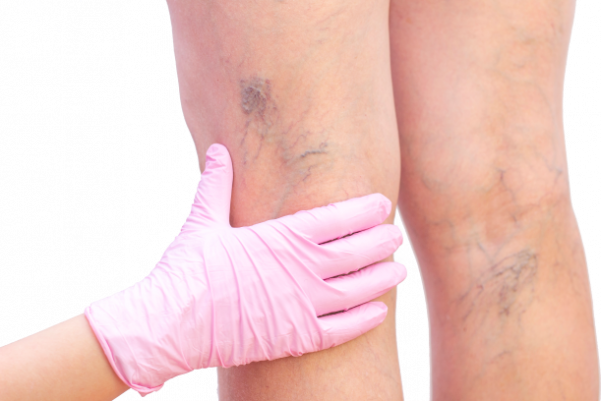
Varicose veins are an insidious disease in that most consider it to be an exclusively aesthetic problem. However, this is a serious and dangerous disease that can lead to sad consequences. This is a pathological condition associated with stagnation or disruption of blood flow in the venous system of the lower extremities.
Signs of varicose veins are nodular expansion of the subcutaneous veins, pain, heaviness in the legs, swelling of the feet and lower legs, fatigue in the legs by the end of the day. Varicose veins are often prone to blood clots and infection. Phlebitis – inflammation of blood vessels or thrombophlebitis – inflammation of blood vessels complicated by blood clots may develop.
Varicose veins can take years to develop, or they can appear in a few months. Most people do not pay attention to its first signs. If you feel heaviness in your legs, cramps, itching, redness, these are the first risk factors for developing varicose veins. Another important point is the presence of varicose veins in parents, because it is often genetically transmitted. Another provocative factor is pregnancy, because the load on the legs is considerable. That is why the problem is often observed in professional athletes who do not feel sorry for themselves. In any case, if you feel discomfort in your feet, it is a reason to get checked. Treatment is not always necessary, but we can strengthen the veins and help them. The doctor will diagnose and provide recommendations on how to prevent the development of the disease and maintain healthy legs.
At the CALM Medical Center, we provide a full range of phlebology diagnostics and treatment, namely:
- Phlebologist consultation
- Dopplerography of veins
- Foam sclerotherapy
- Phlebectomy of veins
- Endovenous laser ablation
- The price of services depends on the stage of the disease and the methodology.
First, a vascular surgeon should examine and ultrasound the veins of the lower extremities. Then he determines the most effective technique for a particular case. At CALM, we prefer safe, minimally invasive surgeries with quick rehabilitation.
Phlebology: diagnostic methods
The most accurate method of diagnosing varicose veins is ultrasound. The doctor sees the functioning of the vessels in real time and understands whether there is a malfunction. Ultrasound diagnostics can detect the following pathologies: in arteries: blood clots, atherosclerotic plaques, inflammation, narrowing of the artery lumen or aneurysms; in veins: thrombosis, varicose veins, inflammation (thrombophlebitis and phlebitis).
A phlebologist’s consultation does not require special preparation, diets, or disruption of your usual lifestyle. To make an appointment, fill out the online form or call.